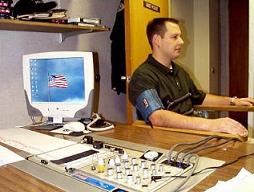
This is how a polygraph test works.
A polygraph commonly referred to as a lie detector, is an instrument that measures and records several physiological responses such as blood pressure, pulse, respiration and skin conductivity while the subject is asked and answers a series of questions. The polygraph measures physiological changes caused by the sympathetic nervous system during questioning. Within the polygraph industry, a polygraph examination is also referred to as a psycho physiological detection of deception (PDD Examination). Several other technologies are also used in the field of lie detection but the polygraph is the most accurate and famous.
Polygraph refers to two ancient Greek words “Poly” meaning many and “Graph” meaning to write. So, it refers to many writings the instrument makes while constantly recording physiological responses that occur inside a person’s body when stimuli is added. The fear of being caught lying brings about these internal physiological changes.
Polygraph is a forensic technique that has undergone over 250 various studies throughout the world in the past 20 years. From these studies conducted, the accuracy rate is approximately 98%. The polygraph is the most reliable way to establish truth or deception.