Testing Procedures.
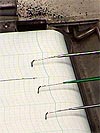
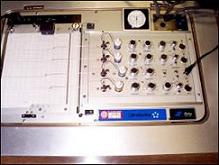
Today, Polygraph examiners use 2 types of instrumentation, analog and computerized. In South Africa, most examiners now use computerized instrumentation. A typical polygraph test starts with a pre-test interview to gain some preliminary information, then the examiner will test the examinee for suitability, the examiner will explain how the polygraph is suppose to work, emphasizing that it is not a lie detector but rather a truth detector and that it is important to answer all questions truthfully.
A Stim (acquaintance) test is often conducted to prove to the examinee that the tests really do work. All questions with regard to the matter under investigation are comprehensively discussed with the examinee before any testing can commence. The actual test then starts.
There are relevant questions, irrelevant questions and technical questions that make up a set of questions. When this procedure is complete, a post test interview takes place where the guilty person will be interviewed to try and gain an admission of guilt A polygraph commonly referred to as a lie detector, is an instrument that measures and records several physiological responses such as blood pressure, pulse, respiration and skin conductivity while the subject is asked and answers a series of questions. The polygraph measures physiological changes caused by the sympathetic nervous system during questioning. Within the polygraph industry, a polygraph examination is also referred to as a psycho physiological detection of deception (PDD Examination). Several other technologies are also used in the field of lie detection but the polygraph is the most accurate and famous.